
How Is AI Used in Civil Engineering?
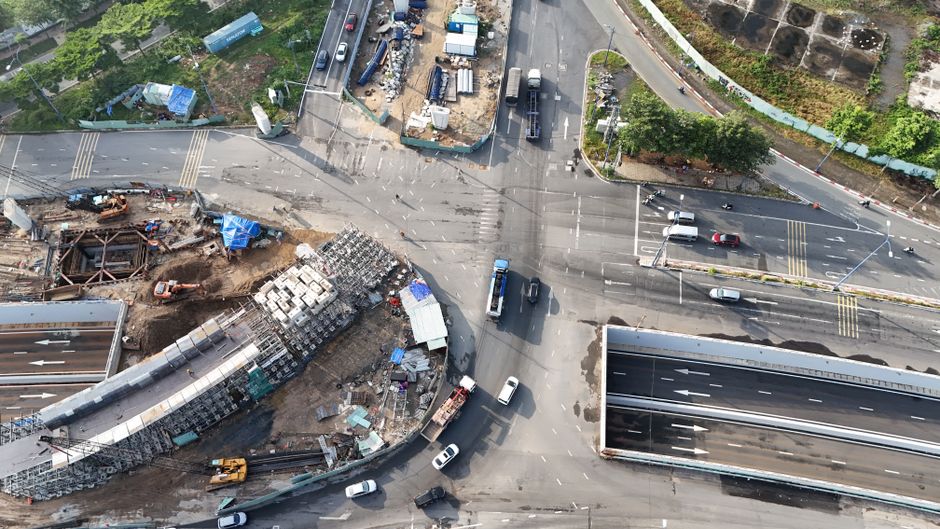
AI is already used in civil engineering to inspect infrastructure, forecast bridge conditions, and generate early design options. A Michigan project paired drone imagery, thermal imaging, LiDAR, and video with algorithms that map bridge-deck damage; other tools forecast component ratings or speed preliminary wastewater designs. These outputs guide attention and exploration. A competent engineer still verifies assumptions, code intent, risks, and final decisions.
What are real examples of AI being used in civil engineering?
Real applications include detecting bridge-deck defects in drone imagery, forecasting the condition of bridge components, and generating preliminary design options for wastewater facilities. They address different tasks: inspection tools help interpret observations, forecasting models estimate future condition, and generative design helps teams explore alternatives.
The Federal Highway Administration describes work by the Michigan Department of Transportation and Michigan Tech that uses drone imagery, thermal imagery, LiDAR, and video for infrastructure condition assessment and asset management. One image-processing algorithm detects concrete spalls and estimates their location, depth, surface area, and volume. A separate thermal-imagery algorithm distinguishes suspected subsurface delamination from healthy bridge-deck areas. The project also created 3D digital models for building information modeling and long-term maintenance documentation.
Forecasting is another use. FHWA researchers developed machine-learning models for bridge decks, superstructures, and substructures. The models combine historical National Bridge Inventory inspection ratings with climate data, and development considers 24 factors, including traffic volume, construction materials, and climate. Their results are probabilities across condition ratings from 9 through 3, rather than a single certain prediction. FHWA describes the work as complementing its InfoBridge data-visualization tools.
For students and practicing engineers, these examples show why “AI in engineering” is not one task. The relevant question is what the system receives, what it returns, and who checks that result before it affects a decision.
Can AI help engineers monitor bridges and other infrastructure?
Yes. AI can help engineers screen inspection data, map damage, and spot changes over repeated surveys, while human inspectors remain responsible for interpreting what the findings mean.
In a 2023 benchmarking report, the Federal Highway Administration documents unmanned aircraft system applications in bridge inspection, road-construction mapping, pavement preservation, and machine-learning-based structural defect detection. Agencies use these systems to collect data more safely, objectively, and quickly than some traditional methods. The report frames the benefit as helping experts direct attention to high-risk or unusual issues, not removing the expert from the process.
The report describes AI analysis of bridge imagery that detected a 1.5 mm crack. That example demonstrates a detection capability, not proof that every crack can be found under every field condition or that a detected feature determines structural safety. The same report notes that current arms-length inspection requirements may need updating before image-based methods can replace that inspection approach.
Repeated drone surveys can also build a record for change-detection algorithms and lifecycle asset management. The practical workflow is sequential: collect imagery or sensor data, process it to flag a feature or change, check the flag against the asset and inspection context, then decide what follow-up is warranted. A model can point to a possible defect. It does not establish the defect’s engineering significance on its own.
How is AI used in civil engineering design and modeling?
AI can help design teams generate and compare early options, but those options become engineering designs only after qualified professionals review and develop them.
The American Society of Civil Engineers reports that Brazilian utility BRK Ambiental began using generative-design software in 2021 for preliminary wastewater infrastructure design. The utility reported producing preliminary designs in less than a day and generating as many as 10 additional options per facility. According to the ASCE account, some development timelines fell from as long as four months to one week, and preliminary design costs fell by up to 80%. These are reported results from that project, not a general performance guarantee for other projects.
The boundary matters: the software supports planning and conceptual design, while engineers take selected outputs through detailed design. Early options are useful for comparison, but they still need checks against project constraints, governing requirements, and engineering assumptions.
AI also supports modeling and inspection workflows. Michigan’s 3D digital models connect observed asset conditions with building information modeling and maintenance documentation. For anyone learning how machine-learning models are packaged and run, this guide to finding free Android machine-learning projects and deploying an on-device model covers a different setting; civil projects add the requirement to verify technical outputs against engineering standards and project conditions.
Across monitoring and design, the core distinction is the same. A model produces a signal, forecast, or option. Engineering judgment determines whether that output fits the real structure and the decision at hand.
Frequently Asked Questions
What parts of an AI-generated engineering analysis need human verification?
A competent person must verify the output, with the depth of review proportionate to the consequences of error. Engineers retain judgment over code intent, governing assumptions, loads, failure modes, risk acceptance, and conflicting data.
What are the main barriers to using AI on civil engineering projects?
ASCE identifies unclear liability and standards of care, limited trust and training, and a lack of evaluation criteria for AI design tools. Data quality and the need for professional review also shape whether a model’s output can support a project decision.
Sources
- Federal Highway Administration — Michigan Deploys Drones for Day-to-Day Operations
- Federal Highway Administration — Condition Rating Forecast of Bridge Components—Machine Learning Models
- Federal Highway Administration — Use of Unmanned Aircraft Systems to Enhance Transportation Infrastructure
- American Society of Civil Engineers — AI Roadmap for Application in Civil Engineering (AI RACE)
- American Society of Civil Engineers — Generative Design Helps Brazilian Utility Meet Wastewater Treatment Goals
Related guides

How Can Google Cloud Operators Build AIOps Workflows?
Combine Cloud Monitoring, Logging, Gemini Cloud Assist, and bounded automation to investigate incidents and reduce alert noise safely.

How Can I Apply for Jobs in Singapore From Overseas?
A practical guide to Singapore job applications from overseas, work-pass sponsorship, MyCareersFuture limits, and recruitment scam checks.

Best AI Tools for Academic Research and Writing: Choose by Task
Choose AI research tools by task: discover papers, check citations, synthesize evidence, and review drafts with human verification.
Best AI Tools for Image Generation: Choose the Right One
The best AI image generator depends on your needs: compare ChatGPT, Gemini, Midjourney, and Firefly by task and current terms.