
How Can I Make a Small Front Entrance or Porch Feel Welcoming Without Blocking the Door?
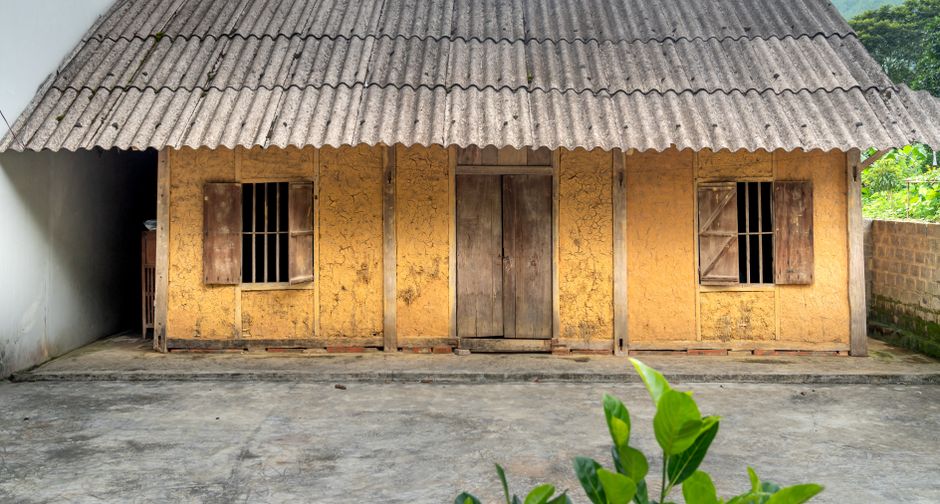
Make a small entrance welcoming by protecting the walking route first, then concentrating color, light, and planting at the edges. Keep the door’s swing and approach clear, use a rug that frames rather than fills the stoop, and limit the scene to a few deliberate pieces: lighting, readable house numbers, and containers matched to the porch’s actual light.
Small porches fail when every good idea gets a place near the door. The result is a crowded route, a snagging door, and decor that creates more cognitive load than welcome. Use a simpler rule: build the path first; dress its edges second.
How do I decorate a small front porch without making it look cluttered?
Decorate a small porch by giving every item a job and keeping the centerline open. One job might be visibility, another color, another seating; if two objects do the same job, remove one.
Start with the clear-path test. The U.S. Access Board specifies a 36-inch minimum clear width for accessible-route walking surfaces, with a limited 32-inch narrowing allowed only for a segment no longer than 24 inches between compliant wider areas. Treat that 36-inch width as a practical layout benchmark: it gives planters, benches, umbrellas, and seasonal pieces a boundary they should not cross.
The door needs its own workspace, too. The Access Board calls for a 60-inch-deep front approach on the pull side of a swinging door and 48 inches on the push side; clearance must remain free of protrusions and changes in level. Put nothing loose where the door opens or where a visitor naturally pauses to operate it. That is not empty space. It is the part of the entry that makes the rest work.
| Priority | Place it | What it solves |
|---|---|---|
| Paint and maintenance | Door, trim, and visible surfaces | Creates a clean focal point without using floor area |
| Lighting | Wall or ceiling position outside the door’s operating space | Makes the entry legible after dark |
| House numbers | Near the light, at eye level from the approach | Helps visitors identify the door quickly |
| Planting | Outer corners, railing edges, or hanging positions | Adds color while preserving the route |
Use contrast pairs when editing the setup. Weak: “a bench, two chairs, four pots, a sign, and a mat.” Strong: “one clear route, one focal point, two matching containers.” The second arrangement is easier to scan before anyone reaches the threshold.
For lighting, warm light is the useful default for a welcoming look. EPA ENERGY STAR identifies 2200–3000K as yellowish or warm light similar to incandescent lighting, while higher ranges become whiter or bluer. If a new downlight will touch insulation, ENERGY STAR says it should be Type IC rated; that is a fixture-selection detail worth checking before installation.
What size outdoor rug should I use on a narrow front porch?
Use an outdoor rug that leaves the approach visibly open and does not enter the door’s swing or maneuvering zone. On a narrow porch, the rug is a frame for the threshold, not wall-to-wall flooring.
Measure from the outer edge of the desired rug position to the opposite obstacle, then preserve the clear route before choosing a rug. Do not select a size because it looks substantial in a product photo. Select it because the walking width remains intact after the rug, pot bases, and open door are all accounted for.
A practical sequence is simple: mark the door swing, mark the route, then place the rug in the remaining zone. A straight rectangular rug works when it sits parallel to the door without pushing into the path. A smaller mat is the cleaner call when the stoop is shallow. Add visual weight with the door color or a pair of compact containers rather than forcing a larger rug into a smaller footprint.
Choose an outdoor-rated rug and secure its edges so the surface stays orderly at the threshold. The source standards emphasize walking surfaces and clearances; the operating principle is straightforward: a decorative surface must never become an obstruction.
How can I add curb appeal when I only have a small entry stoop?
Add curb appeal to a small stoop by upgrading the high-visibility elements in order: paint and upkeep first, lighting and house numbers second, then containers or a seasonal accent. This sequence gives the entry a focal point before it adds objects.
That order also matches the market signal. In its 2023 outdoor-features report, the National Association of REALTORS reported that 92% of REALTORS had suggested sellers improve curb appeal before listing, and 97% said curb appeal matters for attracting buyers. The report estimated a typical $4,800 landscape-maintenance project with 104% cost recovery at resale, while landscape lighting had a $6,800 typical cost, 59% estimated cost recovery, and a consumer Joy Score of 10 out of 10. Those are report figures, not a shopping list for every stoop; the useful takeaway is to spend first where the entry looks neglected or hard to read.
For a renter-friendly version, use containers and removable seasonal pieces rather than permanent construction. Penn State Extension specifically recommends containers for patios, stoops, and balconies. It also gives the operational cost: plan to water containers daily and fertilize every two to four weeks. Buy fewer containers if that care routine will not fit the household schedule.
For a permanent version, focus on the door finish, fixed light, visible numbers, and planting zones that stay outside the approach. Match plants to the actual site, not the label photo. Penn State says light and temperature conditions are the most important considerations for container plants, and an uncovered south-facing porch has different conditions from a covered east-facing balcony.
Run this five-minute drill before purchasing anything: stand at the street, then at the bottom step, then at the door. At each position, ask, “Can a visitor identify the address, see the handle, and walk here without moving an object?” If the answer is no, fix that failure before adding another decorative layer.
Frequently Asked Questions
Which plants work on a covered front porch with little sun?
Tuberous begonias are a strong option for a wind-protected covered porch that is shaded most of the day. The University of Minnesota Extension says they bloom through summer in shady spots and work well in containers and hanging baskets. Observe the porch first: full shade is less than three hours of sun, while part shade is about three to six hours, and container plants should match those conditions.
How much space should I leave clear around my front door?
Use the U.S. Access Board's accessible-route benchmark: maintain at least 36 inches of clear walking width where possible, and keep the door's operating area free of protrusions and level changes. For a front approach, the cited ADA maneuvering clearances are 60 inches deep on the pull side and 48 inches deep on the push side. Place rugs, pots, and furniture outside that working zone.
What front-porch updates make the biggest difference on a budget?
Start with cleanup and paint condition, then make the address easy to read and improve entry lighting before buying several small decorations. The National Association of REALTORS' 2023 report found that 92% of REALTORS recommended improving curb appeal before listing a home. Containers are a practical non-permanent addition for stoops and balconies, but plan for the daily watering they require.