
How Can I Find a Legitimate Available Apartment Fast?
Search on two tracks at once: contact property managers and owners directly while monitoring listing sites, then keep your documents and screening records ready before a unit appears. Treat every listing as a lead, not proof of availability. Ask when the exact unit can be toured, what it will cost with utilities, and what written screening rules apply before paying an application fee.
How far ahead should I start looking for an apartment that is actually available?
Start now if the move is immediate, and build a short daily search routine if the move is tied to a lease end. The useful window is not a fixed number of days. It is the time needed to locate an owner, verify an exact unit, tour it, read the lease, and complete screening without paying for applications that have little chance of working.
Availability is thinner than the total number of homes suggests. The U.S. Census Bureau reported a national rental vacancy rate of 7.1% in the third quarter of 2025, while only 2.4% of all U.S. housing units were vacant and for rent in that quarter. A renter looking for one suitable, ready unit is searching a far smaller pool than the word “inventory” implies.
Place changes the pace. Census data for the third quarter of 2025 put rental vacancy at 9.1% in the South, 6.4% in the Midwest, 6.0% in the West, and 5.0% in the Northeast. Those figures do not predict availability on one block. They do show why a single national rule for timing fails.
| Search situation | Working approach | What to confirm first |
|---|---|---|
| Immediate move | Contact owners and managers each day and ask about units becoming ready. | Exact unit, move-in date, viewing access, and application steps. |
| Lease-end move | Build a contact list early, then check back on a set rhythm. | Whether the contact expects upcoming vacancies and when details become firm. |
| Voucher search | Use housing-agency landlord lists alongside direct outreach and rental sites. | Whether the owner accepts the program and what local steps apply. |
For voucher holders, timing has a formal edge. HUD says a Housing Choice Voucher search period is 60 to 120 days after issuance, as set by the local public housing agency. HUD also says roughly 2,000 local public housing agencies administer the program nationwide. The local agency, not a national portal, is the source for the rules that govern that search.
Make the search small enough to repeat. Keep a simple record of the address, contact name, date reached, exact availability claim, tour status, rent, utilities, and fee. A lead becomes useful when it has a next step.
Why do apartment listings disappear before I can schedule a tour?
Listings disappear because a vacancy can be rented before an advertisement catches up, and because a listing may describe a future opening rather than an apartment ready to show. The gap between a page on a portal and a signed lease is where most wasted time lives.
HUD states that, in larger markets and low-vacancy areas, a list of owners interested in leasing can be more useful than a vacancy list because an identified vacant unit can be rented before it is advertised. That is the central search problem. A portal is a signal. A direct conversation is verification.
Use a narrow set of questions. Ask whether the advertised rent applies to the exact unit, whether it is available or merely expected to become available, whether another application is pending, and when the actual unit can be seen. Ask which utilities the tenant pays and whether the lease has required fees beyond rent. HUD's housing-search guidance names unit condition, rent reasonableness, tenant-paid utility costs, energy efficiency, and location as factors to assess before leasing.
Do not confuse speed with silence. A manager who cannot state the unit number, viewing process, screening standards, or fee structure has not supplied enough information for an informed application. The $1,534 median asking rent for vacant-for-rent units in the third quarter of 2025, reported by the U.S. Census Bureau, is a national benchmark, not a promise about a particular apartment or its full monthly cost.
There is a second reason listings vanish: other applicants move first. The response is not to apply blind. The response is to complete the checks that can be done before money changes hands, then act once the lease terms and unit facts are clear.
Where can I find rentals that are not listed on Zillow or Apartments.com?
Find off-portal rentals through the people and places closest to the unit: property managers, landlord lists, neighborhood signs, local organizations, newspapers, recommendations, and in-person visits. HUD specifically recommends rental websites, local housing-agency landlord lists, recommendations from friends, and visiting units before deciding.
Start with management companies that operate buildings in the areas under review. Their own sites and phone lines can reveal a waitlist, a notice-to-vacate unit, or an owner willing to discuss a coming opening. Ask to be contacted when a matching unit is ready to show. Periodic contact has proven effective in HUD's housing-search guidance because it reveals obstacles and clarifies requirements during the search.
Then widen the net without widening the guesswork. Walk the area at a reasonable time and note legitimate rental signs, building names, and management phone numbers. Check local housing-agency resources if they apply. Look at neighborhood groups as a source of leads, then verify each lead with the owner or manager named on the lease. A post is not a landlord.
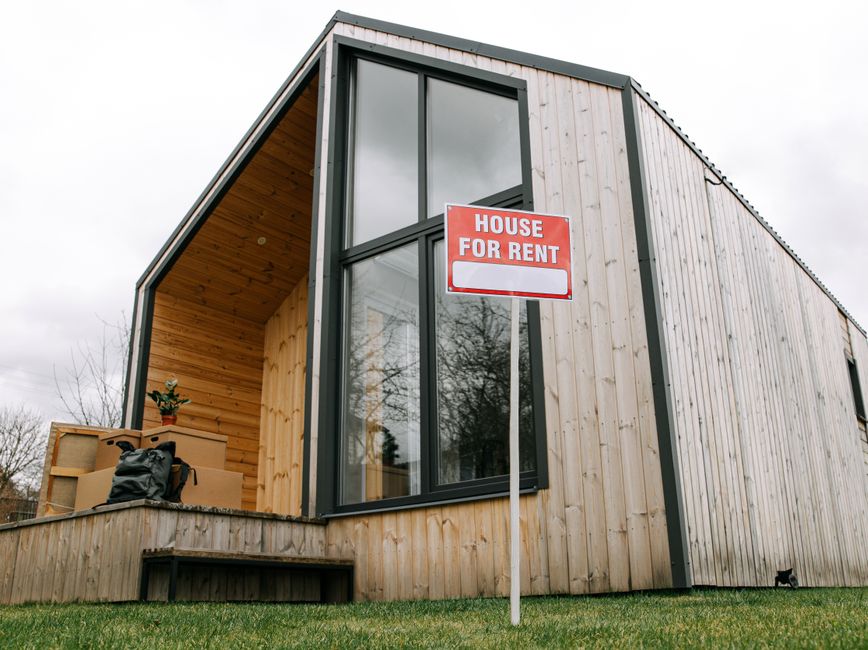
For an occupied or unseen apartment, separate what is known from what is shown. A model unit can establish the building's general finish level. It cannot establish the condition, layout, appliances, repairs, view, noise, or move-in readiness of the offered unit. Request those facts in writing, including the unit identifier and any promised work.
Application readiness has two parts: documents and records. HUD lists income paperwork, bank information, public-assistance documentation where applicable, proof of citizenship, and Social Security cards among common documents in a voucher housing search. A renter can organize the documents that apply to their situation before a promising unit appears.
Records deserve the same attention. The Consumer Financial Protection Bureau says most landlords and property managers use tenant-screening reports. CFPB advises checking for repeated eviction entries, wrong case results, sealed or expunged records, identity errors, and inaccurate credit information. If adverse action is based on a report, the applicant can request a free copy from the screening company within 60 days, according to CFPB.
The cost of applying without this preparation can stack up. CFPB reported that a cited study estimated average application fees at $40 to $59, and that 9% of applicants reported paying more than $100. CFPB also reports that a screening dispute can take up to 30 days for a response. Review before the pressure arrives.
Ask for the screening policy before applying. HUD's 2024 guidance says tenant-screening policies should be written, public, and readily available to potential applicants. The policy should state the records considered, disqualifying incidents, and lookback period. Clear rules save fees. Hidden rules create them.
A fast apartment search is not a hunt for the first open door. It is a method for knowing which door is real.
Frequently Asked Questions
Should I tour a model unit if the actual apartment is occupied?
A model tour can show finishes, shared spaces, and management practices, but it does not prove the condition of the unit offered. Ask for the unit number, expected availability date, a written description of included features, and a chance to inspect the actual unit before signing when possible. HUD identifies unit condition, location, utility costs, and energy efficiency as leasing factors.
How can I get ready to apply quickly without rushing into a bad lease?
Gather the documents a landlord is likely to request, then ask for the written screening policy and full fee details before submitting an application. HUD lists income records, bank information, public-assistance documentation where applicable, proof of citizenship, and Social Security cards among common voucher-search documents. CFPB guidance also supports reviewing tenant-screening information early, since correcting an error can take up to 30 days after a dispute.
Sources
- U.S. Census Bureau, Housing Vacancies and Homeownership, Third Quarter 2025
- U.S. Department of Housing and Urban Development, Housing Search and Leasing Guidebook Chapter
- U.S. Department of Housing and Urban Development, Housing Choice Vouchers for Tenants
- Consumer Financial Protection Bureau, Review Your Rental Background Check
- U.S. Department of Housing and Urban Development, 2024 Guidance on Rental Applicant Screening
Disclaimer: This article is for general information only and is not financial advice. It does not take your personal circumstances into account, and past performance does not predict future results. Speak to a licensed financial professional before making money decisions.